CRB Advanced Hand Wrapper System Review
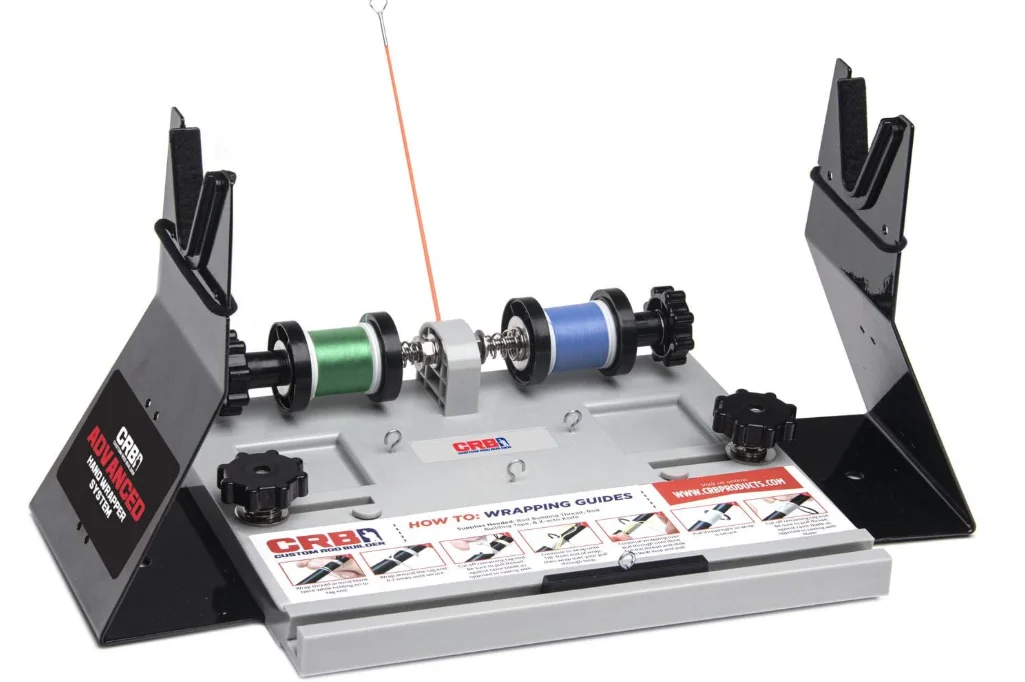
Based on manufacturer documentation, current product information and common builder questions.
Quick verdict: A dedicated manual wrapper gives you adjustable rod supports, controlled thread delivery and a more repeatable bench setup than improvised supports. The value is workflow and repeatability, not a guarantee of better wraps.
| Product at a Glance | |
|---|---|
| Type | Manual hand wrapper with dual thread tensioner |
| Spool capacity | 2 spools, easy color changes for underwraps/overwraps |
| Setup | Standalone bench-top manual wrapper |
| Price | Varies by seller/configuration — check the current listing |
| Best for | Builders past the first-kit stage doing regular wrap work |
What problem this actually solves
Improvised supports can work, but a purpose-built manual wrapper adds adjustable rod supports, a dedicated thread path and repeatable tension adjustment. Those features make the bench workflow easier to reproduce; they do not remove the need to control tension and packing technique.
Why 2-spool capacity matters more than it sounds like
Multiple spool positions are useful when a build uses underwraps, trim bands or more than one thread color because each spool can remain routed through the carriage. That reduces setup changes; consistent tension still depends on the builder and the tension adjustment.
Ball-bearing tension vs. spring tension
CRB describes ball-bearing thread retainers, a tension rod and precision adjustment knobs intended to make thread delivery smooth and adjustable. Those features reduce friction and make settings easier to repeat, but the builder still controls the final wrap tension.
Built-in tool storage. A small thing that adds up
Not a headline feature, but worth mentioning: having guides, blades, and small tools within reach on the unit itself instead of scattered across the bench is one of those things that doesn't matter until you're mid-wrap and need a razor blade with epoxy-tacky fingers. It's a workflow improvement, not a performance one.
How this fits your tool budget
Compare the current retailer price with two alternatives: an improvised/manual support for occasional builds and a powered wrapper for higher-volume work. This hand wrapper sits between them by adding purpose-built supports and thread control without a wrapping motor.
One way to decide: count how many wraps you have redone in your last three builds. If the answer is none, the DIY setup is still doing its job.
What's good
- 2-spool tensioner genuinely speeds up and cleans up color-change wraps compared to single-spool setups
- Ball-bearing tension holds consistent through a full spool, unlike basic spring tensioners
- Built-in tool storage keeps small tools within reach mid-wrap
What's not
- Overkill for a first build — you won't feel the benefit until you're wrapping regularly
- Manual, not motorized, still requires hand-turning technique, this isn't a power wrapper
- Takes more bench space than a simple improvised support or clamp-style tensioner
Setting it up on your bench
The Advanced Hand Wrapper is a bench-top/standalone manual system. Leave enough clear bench length for the longest blank you plan to wrap, set the rod supports so the blank turns freely, and route thread through the carriage and tension hardware according to the current CRB instructions before dialing in tension on scrap thread.
Who it's for, and who should look elsewhere
Good fit if you...
you've completed at least one or two builds already and are frustrated with tension drift or slow color changes on a DIY or basic tensioner setup.
Skip it if you...
this is your first build, a basic kit tensioner or even a simple DIY setup is enough while you're still learning wrap technique itself, or you're looking for a motorized power wrapper rather than a manual one.
Questions builders ask
Do I need a motorized wrapper instead of this?
Will this work with any thread brand?
Is this worth it if I only build 1-2 rods a year?
Is the CRB hand wrapper wall-mounted?
What exactly comes in the CRB Advanced Hand Wrapper System?
Is the CRB hand wrapper worth it over a cardboard box setup?
CRB hand wrapper vs a power wrapper: which should I buy first?
CRB Advanced Hand Wrapper System — price and availability can change. Check the current retailer listing before buying.
Check Current Price