Flex Coat Rod Wrapping Finish Review
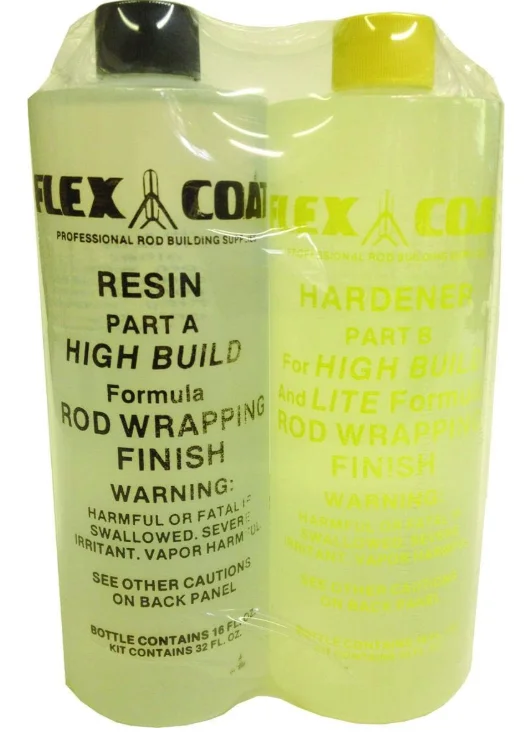
Based on manufacturer documentation, current product information and common builder questions.
Quick verdict: Flex Coat is a widely documented two-part rod-wrap finish. The critical variables are accurate equal-volume measurement, thorough mixing, controlled application and the cure/recoat schedule in the current instructions.
| Product at a Glance | |
|---|---|
| Type | Two-part rod wrapping finish; measure equal portions by volume per current instructions |
| Cure time | Follow current Flex Coat instructions; cure/recoat timing varies |
| Best for | Thread wrap coating, general finish |
| Price | Varies by seller/configuration — check the current listing |
| Recommended | Rod turner/dryer for controlled leveling while the finish sets |
Why finish is where good wraps go to die
A clean thread wrap can still look uneven if finish is mixed incorrectly, applied too heavily or allowed to pool while it sets. Treat measuring, mixing, application and rotation as separate steps rather than assuming the epoxy will self-correct a rushed process.
The mixing ratio actually matters
Flex Coat instructs builders to measure equal portions by volume and mix thoroughly until the finish is clear. For small batches, use clean measuring syringes intended for the product rather than eyeballing the ratio; a weight-based 1:1 mix is not the same thing unless the manufacturer specifically provides a weight ratio.
Why you can't skip the dryer
A rod turner helps keep a wet finish distributed while it sets. It does not correct a bad mix or over-application, but controlled rotation can reduce pooling and sagging while the coat levels.
Cure timeline, don't rush it
Cure and recoat timing depends on the product version, batch size and conditions. Flex Coat guidance for unthinned coats references recoating after roughly 6–8 hours; follow the current label/instructions and allow the finish to cure fully before hard use.
Mix ratio, and where this fits your build budget
When a finish stays soft or tacky, the usual culprit is the mix rather than the product. Flex Coat goes 1:1 by volume, equal parts resin and hardener, measured rather than eyeballed. Syringes make that easy to get right, which is the main reason to buy the kit version on a first build.
Finish is a small part of the total component list, but it is highly visible. Compare products by instructions, working properties and compatibility with your workflow rather than by a cached retailer price.
What's good
- Self-levels well when mixed correctly, forgiving of minor application unevenness
- Clear two-part finish designed specifically for rod thread wraps; follow the current measuring and mixing instructions.
- Widely used enough that troubleshooting help (mixing issues, bubbles, cure problems) is easy to find in the builder community
What's not
- A rod turner/dryer is strongly recommended for keeping a wet coat moving while it sets
- 1:1 mixing by volume requires actual measuring tools for consistent results, not eyeballing
- Cure timing varies; follow the current product instructions before handling or fishing the rod
Common finish problems and what actually causes them
When finish problems appear, start with the controllable variables: equal-volume measuring, thorough mixing, clean tools, appropriate temperature and a coat that is not overloaded. Flex Coat specifically recommends mixing until the finish becomes clear and scraping the sides and bottom of the cup so resin and hardener are fully combined.
Who it's for, and who should look elsewhere
Good fit if you...
you're finishing thread wraps on any custom build and already have (or are willing to buy) a basic rod dryer, or you want a finish forgiving enough to not punish small application mistakes on a first build.
Skip it if you...
you do not have a way to rotate the rod while the wet finish levels, or you need a cure schedule that differs from the current Flex Coat instructions.
Questions builders ask
Do I really need a rod dryer for a good finish?
How long before I can fish a rod after finishing?
Can I use this to glue on the reel seat and grip too?
Can I speed up the cure time?
Flex Coat Rod Finish — price and availability can change. Check the current retailer listing before buying.
Check Current Price