RBS PRO G2 Power Wrapper Review
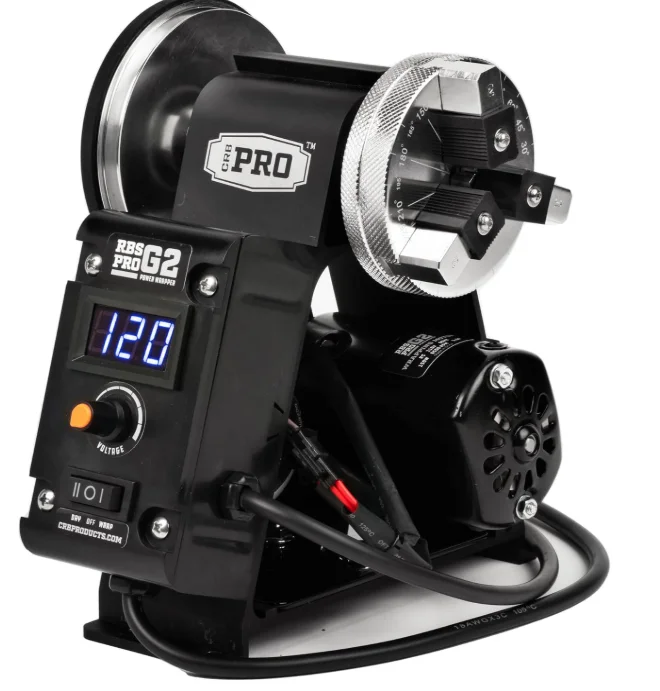
Based on manufacturer documentation, current product information and common builder questions.
Quick verdict: The RBS PRO G2 combines powered wrapping controls with an integrated drying function. It makes the most sense when repeatable powered rotation, grip work or keeping the rod on one machine through wrapping and drying matters to your workflow.
| Product at a Glance | |
|---|---|
| Type | Motorized power wrapper with digital speed control |
| Built-in dryer | Yes — integrated drying motor (verify current configuration) |
| Controls | Digital voltage readout, power control and foot pedal |
| Price | Varies by seller/configuration — check the current listing |
| Best for | High-volume or semi-professional builders |
Who this is actually built for
A power wrapper is not required to build a good rod. Its case is strongest when you want powered rotation, foot control, repeatable speed settings or an integrated drying workflow. Occasional builders can still do excellent work with a manual wrapper and a separate dryer.
What the digital control actually buys you
Mud Hole describes a power control knob with a digital voltage readout, an integrated foot pedal and multiple belt positions for speed/torque changes. The practical advantage is controllable powered rotation; wrap quality still depends on thread preparation, tension and technique.
The built-in dryer changes your workflow, not just your equipment
The built-in drying motor lets the rod stay on the same machine after finish application, reducing transfers between wrapping and curing. Use the drying setup and speed specified in the current CRB/Mud Hole instructions for the finish system you are applying.
The honest trade-off: is this actually worth it for you
The main trade-off is complexity and cost versus workflow. The PRO G2 adds powered rotation, digital voltage readout, foot control, belt-based speed/torque options, indexing and a drying motor. A manual wrapper remains simpler and sufficient for many occasional builders.
How this fits your tool budget
Compare the current price with a manual hand wrapper plus a separate dryer. The powered unit earns its place when the integrated workflow and powered controls matter more to you than minimizing equipment cost.
That math only turns in favour of the powered unit when the hours saved matter more than the components you didn't buy, which in practice means building for other people rather than for yourself.
What's good
- Power control, foot operation and stepped pulley options provide more control over powered rotation than a manual wrapper.
- Integrated drying function keeps wrapping and curing on the same machine
- Powered controls, indexing and adjustable speed/torque setup aimed at repeatable workflow
What's not
- Higher cost and complexity than a manual wrapper; value depends on whether powered rotation and the integrated workflow matter to your build volume.
- Overkill for anyone still learning basic wrap technique — the precision doesn't help if the fundamentals aren't there yet
- Bigger footprint than a manual wrapper, needs dedicated bench space
What the digital voltage control actually controls
The digital display is a voltage readout, not a direct RPM display. Mud Hole also describes a foot pedal and stepped pulleys that provide additional control over rotation speed and torque. Treat the current manufacturer instructions as authoritative because controls can change by product revision.
Who it's for — and who should look elsewhere
Good fit if you...
you're building rods often enough that wrap speed and repeatability are actually limiting your output, or you're running a small custom rod business and the time saved per build adds up.
Skip it if you...
you only build occasionally and a manual hand wrapper plus a separate dryer already covers the workflow you need.
Questions builders ask
Is this necessary for a hobbyist builder?
Does the built-in dryer replace a separate rod dryer?
Is digital speed control worth the price jump over a manual wrapper?
Is there a warranty on the motor?
RBS PRO G2 Power Wrapper — price and availability can change. Check the current retailer listing before buying.
Check Current Price